 |
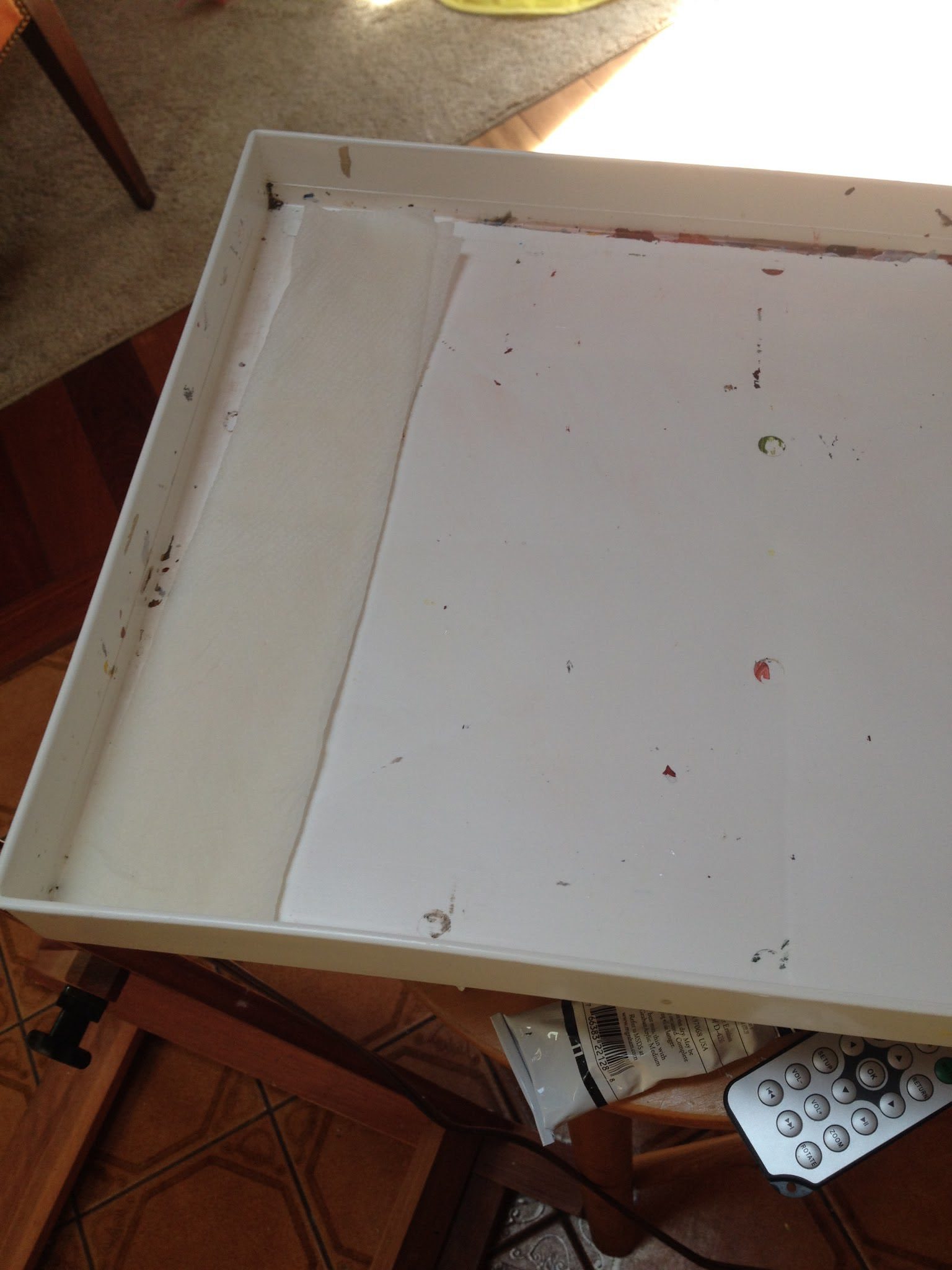
| Example of Color Shift – The wet paint appears lighter than the dry paint of the same color. |
If you’ve ever tried to paint an area of a painting using a flat single acrylic color, like the color of this notebook I’m painting in this image, you have very likely witnessed “color shift.” Sometimes it’s more obvious in certain colors than in others, but it’s always there. In the example above, the wet paint is significantly lighter than the dry paint. This is just one of the reasons why mixing colors in acrylic is tricky compared to other mediums.
While I mix many of my colors in small quantities on my palette, just as I used to do in oil, it doesn’t stay wet long enough for me to use these small piles on larger areas that need to be a single flat color. Using a single flat color is also a great way to establish a local color that is later refined and glazed with details to provide dimension. And because it’s next to impossible to mix the exact color twice due to the color shift phenomenon, acrylic painters need a better solution than struggling back and forth to wait for colors to dry to see if they match.
In art stores, they sell fairly large containers intended to store acrylic paint mixes. But I wanted a simpler solution for mixing my colors. I wanted something small, disposable, suitable for my small paintings and inexpensive.
On a whim, I decided to explore the disposable container section of my local Target, and after picking up several items, I was drawn to this one: Diamond Daily Mini Cups.

These wonderful little cups come in a bag of 50, with lids, and are only a few dollars, making them cheap enough for me to mix colors in quantities just large enough for the particular painting I’m working on. I use anywhere from a couple of flat color mixes to up to 20 for each painting.
 |
| A few of my color mixes for a painting I’m currently working on. |
These containers will keep the paint fresh for at least a day. However, I have learned that if I store them securely in a ziploc storage bag, I can keep them fresh for up to a week or more, depending on the brand of paint (M. Graham stays wet longer than Golden) and the particular colors (some seem to dry out faster than others).
 |
| Paint containers stored in a ziplock bag. |
I’ve found this to be such a simple solution that makes it much easier to avoid the color shift problem. Give this method a try, and I’ll discuss additional details about how I mix these colors correctly and use them more economically in future posts.
In the mean time, happy painting!
 |
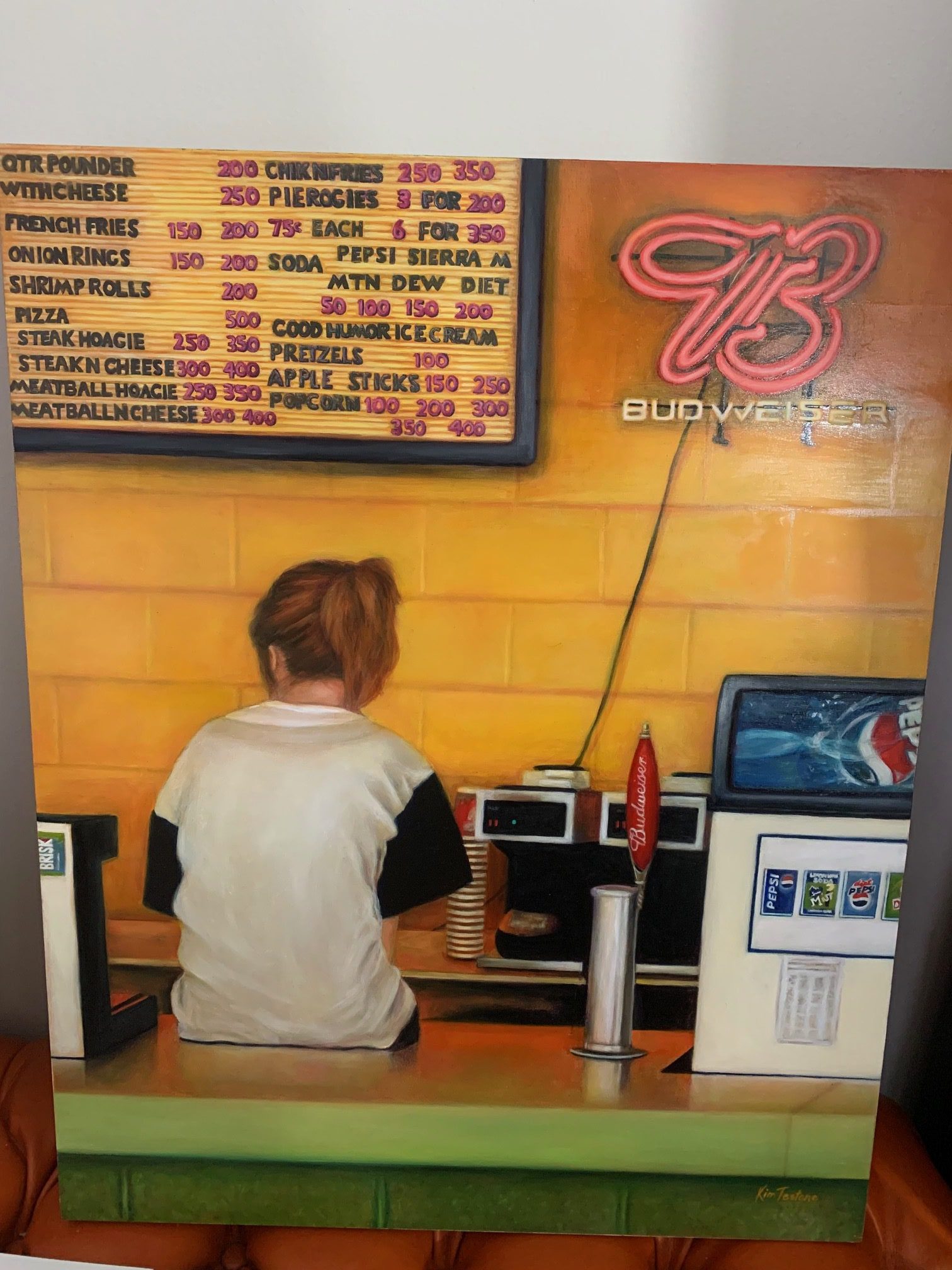
| Finished painting – “On the Scene,” 8″ x 8″, acrylic on panel (commission). |


Leave a Reply