When I first started painting in acrylics, it was very difficult for me to find information to help me paint the way that I wanted to. I was transitioning from a brief few years as a realism oil painter who worked in multiple glazed layers, and I wanted to be able to take advantage of the fast-drying nature of acrylics but still preserve a lot of the technique I had already been developing. I spent years trying to research, learn and perfect my approach, and I long ago decided that I would try to share what I’ve learned so other aspiring artists don’t have to struggle quite as much just to “figure stuff out” and can instead just get to the “making the art” phase.
I will say upfront that my painting approach is not for everyone. It is very time-consuming and very different from a lot of other painters. However, what I’d also say is that no single approach is right for any artist. I will happily share on my MakingHappyArt.com blog and on my social media what I can, as time allows, and then I expect that other interested artists will perhaps pick-and-choose those aspects most relevant to them and then move on, combining those parts with lessons from other artists.
I’m including the basic acrylic painting supplies I use, as well as a few alternatives I’ve worked with, and a list of books that I find to be essential in my library. Some of the books are actually aimed at oil painters, but I have applied much of the knowledge contained there to my acrylic realism.
Experience is of course the best teacher, and I am still learning every day how to improve on the realistic nature of my work.
Thanks for visiting!
Kim T.
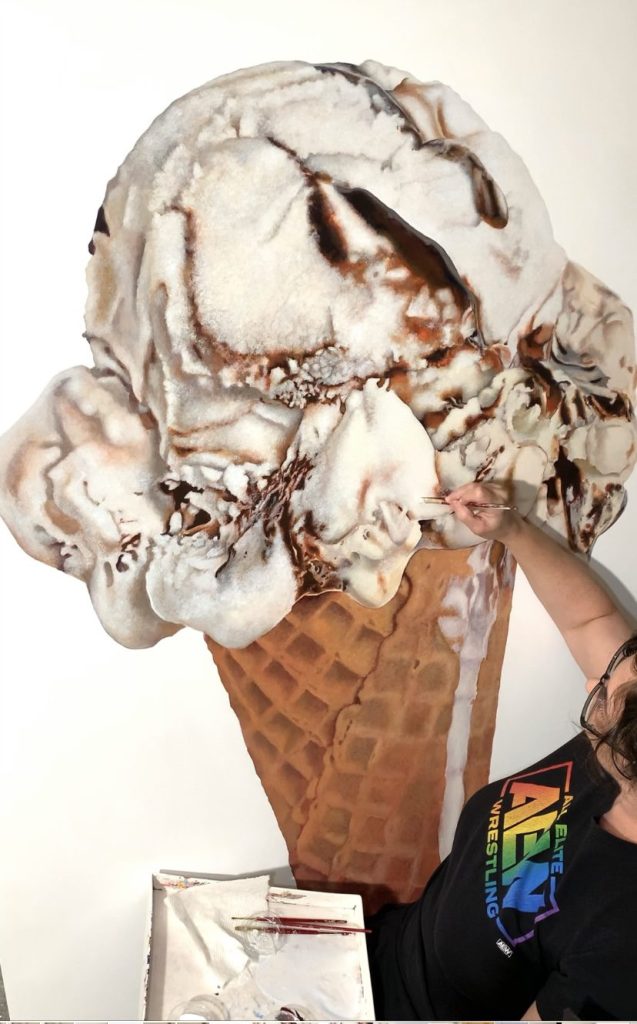
Painting Supplies
Golden Heavy Body Acrylic Paints – Although I’ve experimented with other acrylic paint brands in the past, Golden Heavy Body Acrylic Paints are my everyday go-to. I typically use heavy body paints and thin them with medium (never water), though for certain purposes I occasionally use fluid paints if I am laying in a large flat area of base color, as well as for the white backgrounds in most of my paintings. Truth be told, I keep a very limited palette that is at most: Titanium White, Payne’s Gray, Cadmium Red Medium Hue, Cadmium Yellow Medium Hue, Quinacridone Magenta, Phthalo Blue Red Shade, Phthalo Blue Green Shade, Pyrrole Red, Burnt Umber and Cadmium Orange. Even some of those I rarely use.
Golden Satin Glazing Liquid – This is probably the most important painting tool in my arsenal. I’ve adjusted things a bit over the years, but essentially, I mix almost every bit of paint I use with a bit of Golden Satin Medium as I go. It allows me to create very very thin glazes of color, help to extends the drying time just a bit to allow for effects, and builds a very structurally sound painting. Think of the medium as translucent paint with high flow and no color.
Ampersand Gessobord – I’ve painted on a few different types of panels over the years, and while I don’t use Gessobord as often as I used to, it is an excellent ready-made panel with just a bit of texture and great paint adhesion.
American Easel Panels – This is the panel I use the most often now, mostly because of the excellent craftsmanship and because I can easily sand it and add additional layers of gesso to create a really smooth painting surface. You can buy these through Amazon or most major art supply chain stores, or you can order directly from the AmericanEasel.com website.
Princeton Synthetic Sable Brushes – I use some pretty small brushes for most of my work, down to 5/0. Princeton synthetic watercolor brushes are my personal favorite by a longshot. I’ve tried other more expensive and less expensive, but these are always the best for my painting style and my budget. Just be able to that you have to take good care of them and clean them well after each session and even doing that they will still wear down after a few months of constant use.
Masterson Sta-Wet Palette – This is a great rectangular palette with a lid. I line my acrylic paints up on a folded up damp paper towels on the left side of my palette, rewetting the towel each day, and it helps my paints last longer.
Palette Paper – I used to try to scrape my paint off of my palette, but ugh, so not worth it. Just get the palette paper. Easy to mix your acrylic paint with each other and a bit of medium. One sheet typically last me for a full day of painting. I usually just leave them in my palette when used up and keep layering new ones on top until I have several and then throw them away together.
Paper Towels – I’ve already mentioned that I line up my paints in my palette on folded over damp paper towels. I also keep a dry one in my palette so that I can constantly wipe off my brush. Sometimes, that is to wipe off excess paint. Usually, though, it’s to clean my brush in my little water cup and ensure that I don’t mix any water in with my paints. I want my paint to primarily consist of paint and medium, so it ensures a strong bond and structure, so I really try to avoid having water mixed in at all. But I do constantly clean my brush off as I go, either when switching colors or just to get rid of any build-up of paint that is starting to dry tacky on it.
Mini Condiment Cups with Lids – I’ve found these little beauties to make my life as a painter so much easier. I use them to hold water, to hold medium (which I can cover with a lid) and to hold color mixtures (usually I do this when I need to mix a specific color for a larger space or if I want to make sure the color I use is the same throughout the layers I’m putting on). I can then store my mixed colors with lids on in a Ziploc bag, and they will keep for up to a week.
Sandpaper – I keep a few different grits of sandpaper around for different purposes. Sometimes I need to sand the edges of my panels. Sometimes, I need to sand out a tiny spec of dirt or fuzz out of my painting. Sometimes I need to sand in between the layers of gesso when i’m preparing my panels.
Richeson Easels – Years ago, and I actually met the artist whose easel designs were purchased by the Richeson company, and I very much understand why, It’s ease of use and functionality.
Recommended Books
While some of these books are targeted at oil painters, I’ve found that most acrylic painting books fall short, focusing on a direct painting style rather than working in glazes. I wanted to learn how to use color and classical structure, so I have had to adapt these books to my painting methods. In the end, my only goal is to create art that is beautiful, compelling and a little bit magical, and these authors have provided me with the best insights.
Color and Light: A Guide for the Realist Painter by James Gurney
Classic Still Life Painting by Jane Jones
Acrylics The Watercolor Alternative by Charles Harrington
Problem Solving for Oil Painters by Gregg Kreutz
Painting Sharp Focus Still Lifes by Ken Davis and Ellye Bloom
Happy Painting!
Kim Testone is a participant in the Amazon Services LLC Associates Program, an affiliate
advertising program designed to provide a means for sites to earn advertising fees by advertising and
linking.


You must be logged in to post a comment.